How to Choose a Cleanroom Mat: A Sticky Mat Alternative Guide
Quick answer: The main alternatives to sticky (tacky) mats at a cleanroom entrance are reusable polymeric contamination control matting, wet disinfectant mats and automated sole-cleaning stations. Choose by what crosses the threshold, how many contacts each shoe and wheel makes, how the option will be cleaned, and what independent evidence supports it.
Most sites chose their cleanroom mats by purchase order, not decision. Yet the mat at the gowning-room door sits where every person, trolley and pallet jack crosses from a dirtier zone into a cleaner one.
So how do you choose a cleanroom mat that fits your traffic, cleaning regime and contamination control strategy? Specify it against evidence and use, not price per sheet.
Sticky mat alternatives compared
There is no single best cleanroom mat; it depends on what crosses the threshold and how the mat is maintained. The table compares the common options.
Comparison of Contamination Control Solutions
1. How it works
Sticky / tacky mats: Adhesive sheets trap particles on contact.
Polymeric contamination control matting: Polymer surface retains particles until cleaned.
Wet disinfectant mats: Liquid-soaked surface wets and disinfects soles.
Automated sole cleaners: Brushes or rollers clean soles as a person steps through.
2. Wheel traffic
Sticky / tacky mats: Sheet edges may lift or tear.
Polymeric contamination control matting: Continuous surface takes trolleys and wheeled equipment.
Wet disinfectant mats: Wheels pick up and spread liquid.
Automated sole cleaners: Usually designed for footwear only.
3. Consumables and waste
Sticky / tacky mats: Replacement sheets at every peel.
Polymeric contamination control matting: No sheets; mat replaced at the end of its service life.
Wet disinfectant mats: Disinfectant refills and pads.
Automated sole cleaners: Disinfectant, brushes and servicing.
4. Maintenance
Sticky / tacky mats: Peeling on a schedule.
Polymeric contamination control matting: Cleaning to a written procedure.
Wet disinfectant mats: Topping up and changing liquid.
Automated sole cleaners: Servicing and cleaning the unit.
5. Evidence to request
Sticky / tacky mats: Capture data at the sheet's loading level.
Polymeric contamination control matting: Removal, shedding and material test data.
Wet disinfectant mats: Disinfectant efficacy and slip data.
Automated sole cleaners: Removal data for the target soil.
A cleanroom mat is a control at an interface, so describe the interface first: who and what crosses it, how often, and from where.
Footwear from a warehouse corridor carries more than footwear inside a gowned area. Wheels are an easily overlooked second pathway: they pick up and redeposit contamination as they rotate, and a mat sized for feet may be too short for them.
EU GMP Annex 1 expects sterile manufacturers to maintain a documented contamination control strategy. Recording why each mat is there keeps the choice traceable rather than habitual.
Step 2: Size the Cleanroom Entrance Mat to the Stride, Not the Door
Removal happens through contact, so the number of times each sole or wheel touches the mat matters more than how neatly it fits the frame.
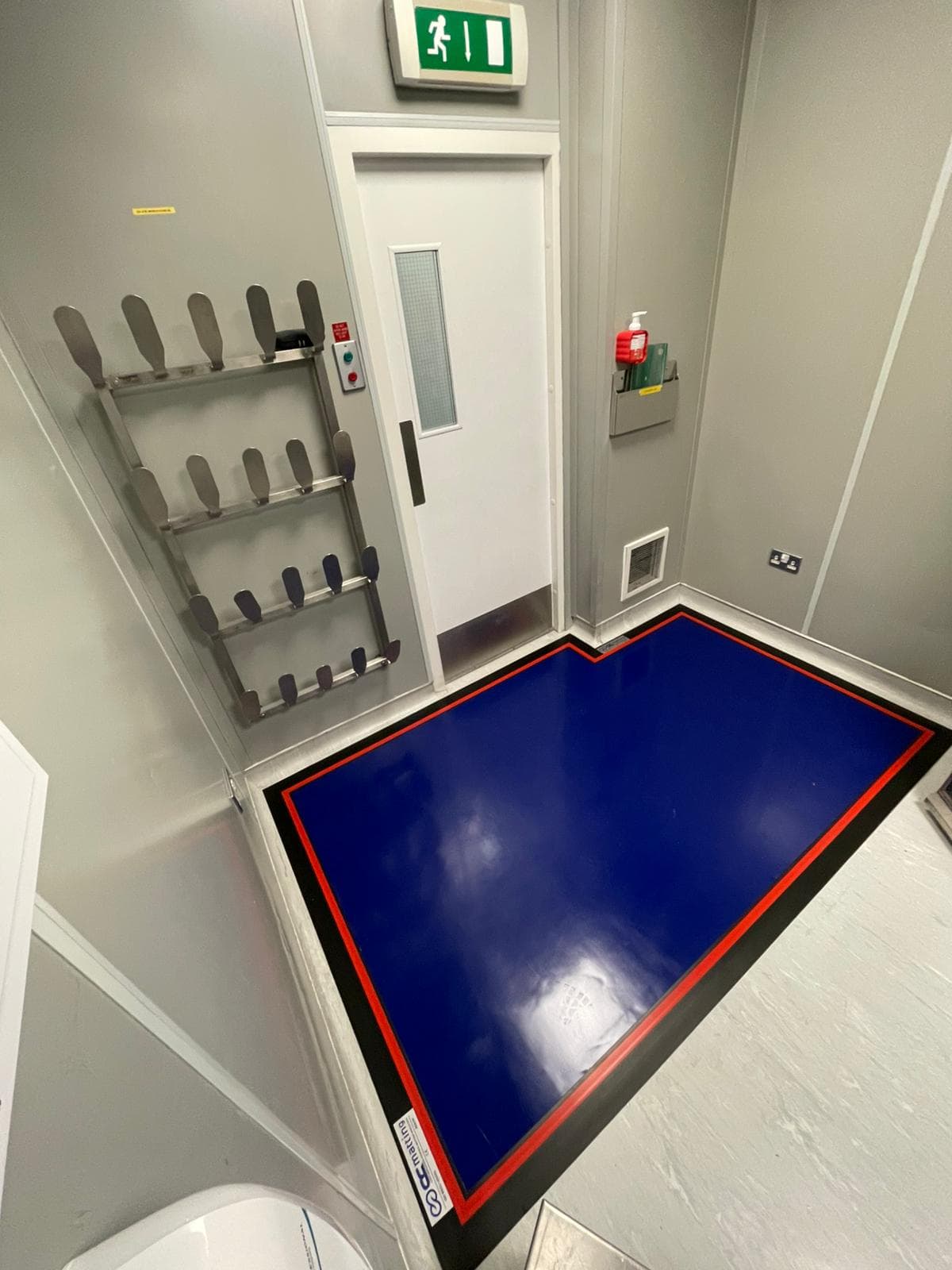
One independent laboratory study of CC Matting’s heavy-duty mat, for example, used three steps per shoe and a 90 cm wheel roll. Sizing cleanroom entrance mats so normal walking gives several contacts per foot brings real use closer to tested conditions. Cover the full doorway width; busy openings can be specified as a continuous run of contamination control flooring.
Step 3: Ask What Contamination Control Polymeric Matting Has Been Tested For
Whether buying for a pharmaceutical, medical device or healthcare site, ask any contamination control mat supplier for the same six pieces of evidence. CC Matting's results are shown as examples.
CC Matting – Quality & Performance Evidence