10 Ways Contamination Control Mats Protect Critical Environments
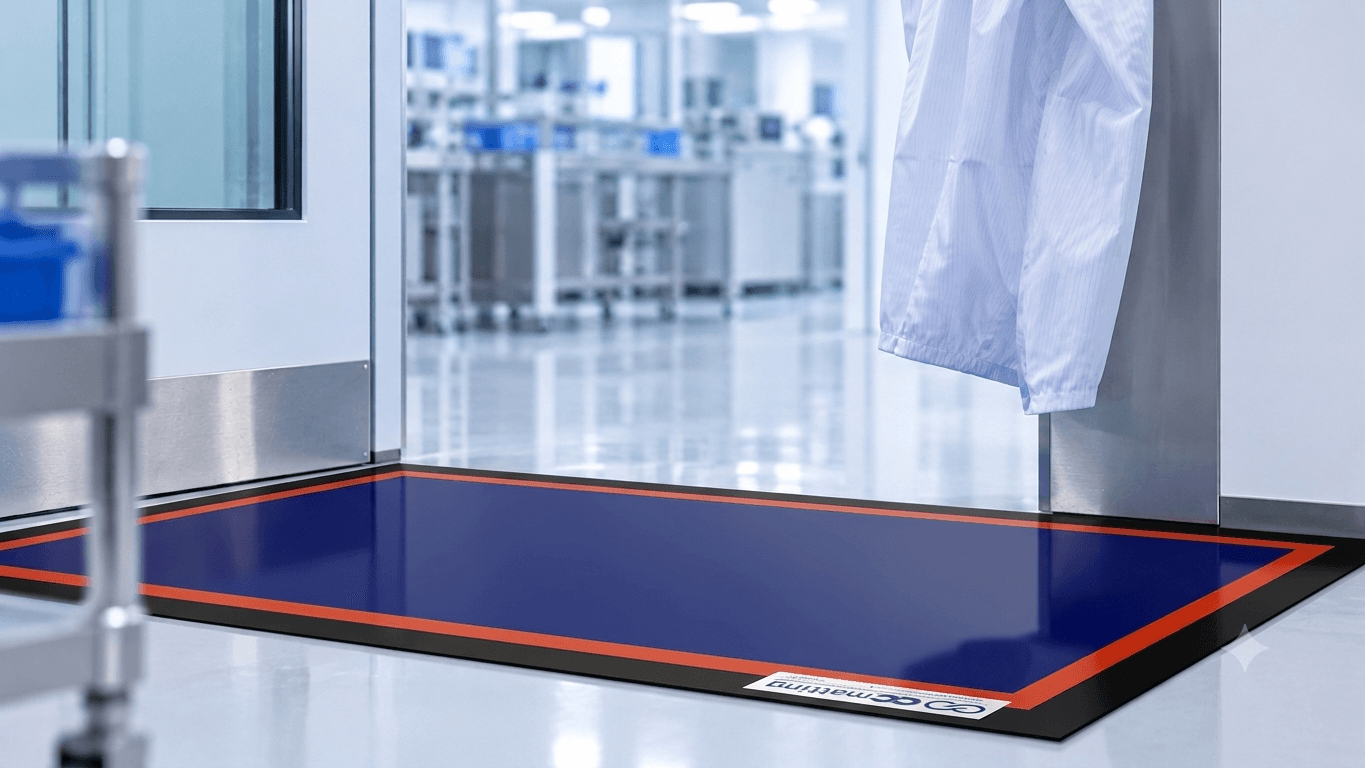
How reusable cleanroom matting protects critical environments: particle capture, ESD, slip and outgassing, plus how it compares as a sticky mat alternative.
Stay updated with the latest in contamination control, cleanroom technology, and industry best practices.

How reusable cleanroom matting protects critical environments: particle capture, ESD, slip and outgassing, plus how it compares as a sticky mat alternative.

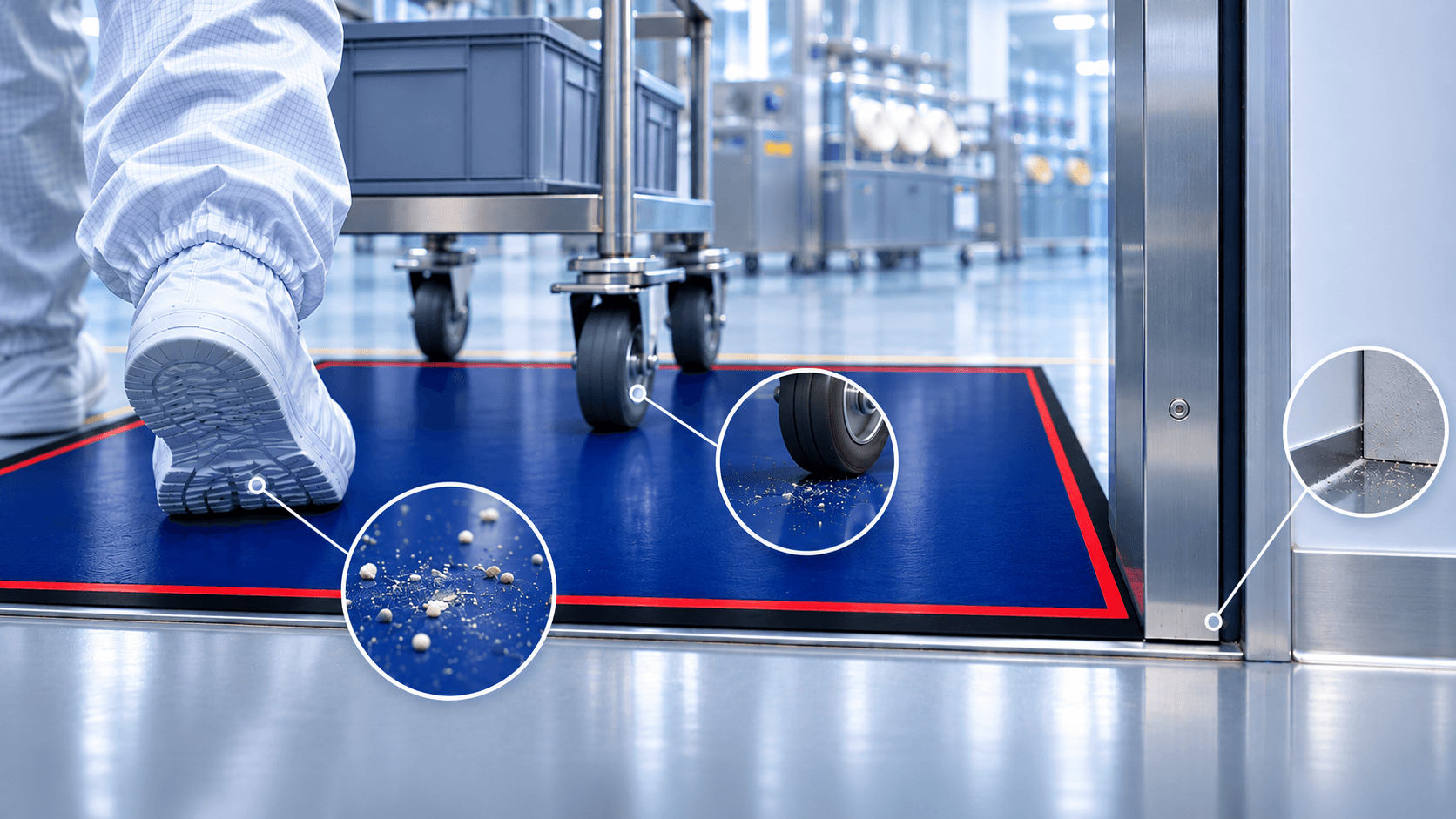
How cross-contamination travels on footwear, wheels and materials in healthcare, food and pharma sites, and how to stop it at the threshold.

Two gaps let floor-borne contamination past cleanroom entrance mats. Learn what the alpha and beta gaps are, how to find them and how to close them.

Corridors, goods-in and packaging areas carry contamination into medical device cleanrooms. How to map the route and where reusable cleanroom matting fits.

Data centres arent cleanrooms, but dust still causes hardware failures. How zinc whiskers, cooling airflow and foot traffic spread contamination.

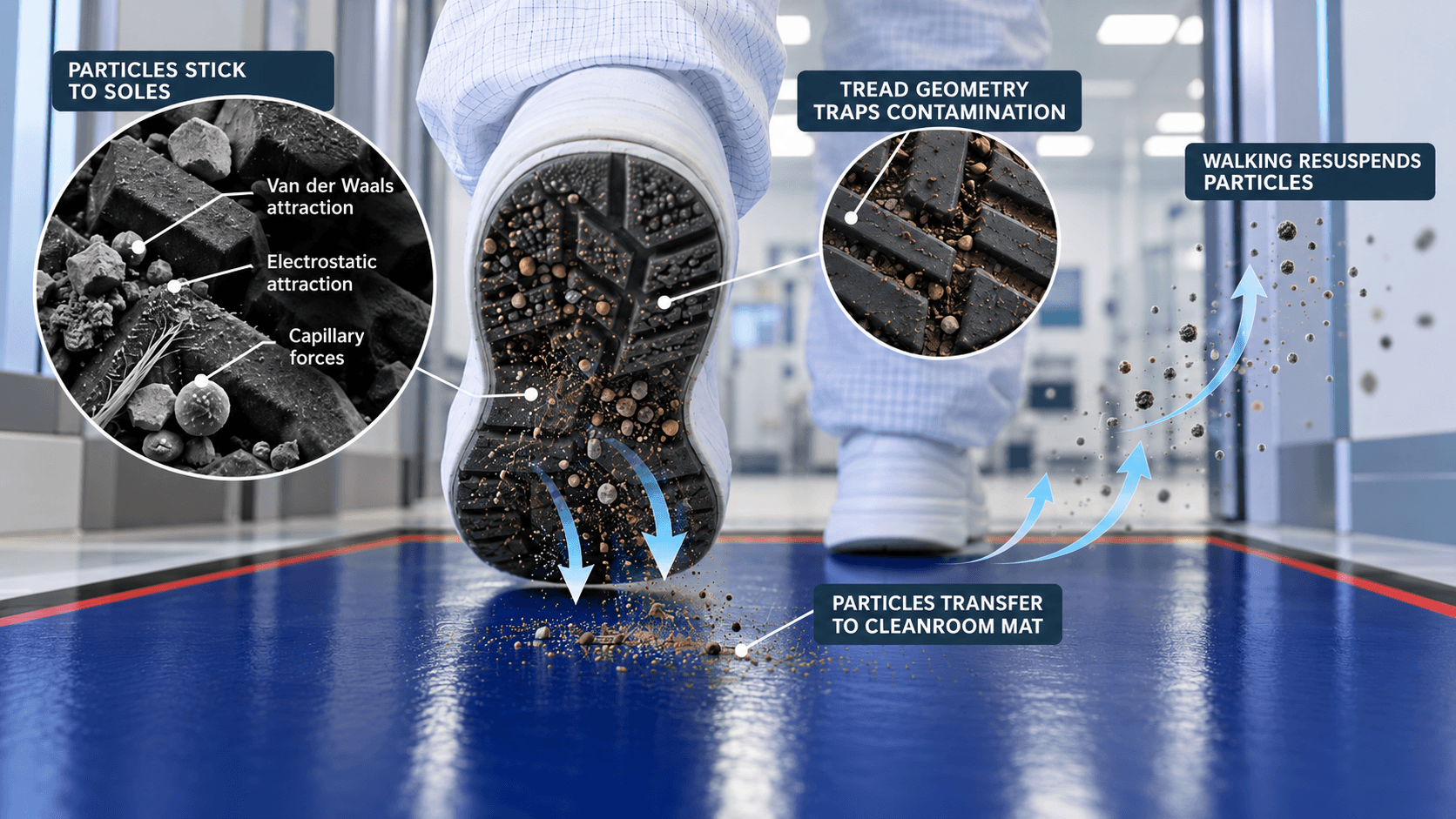
Why shoe soles move particles into cleanrooms: adhesion, tread geometry, resuspension when walking, and why contact steps on a contamination control mat matter.

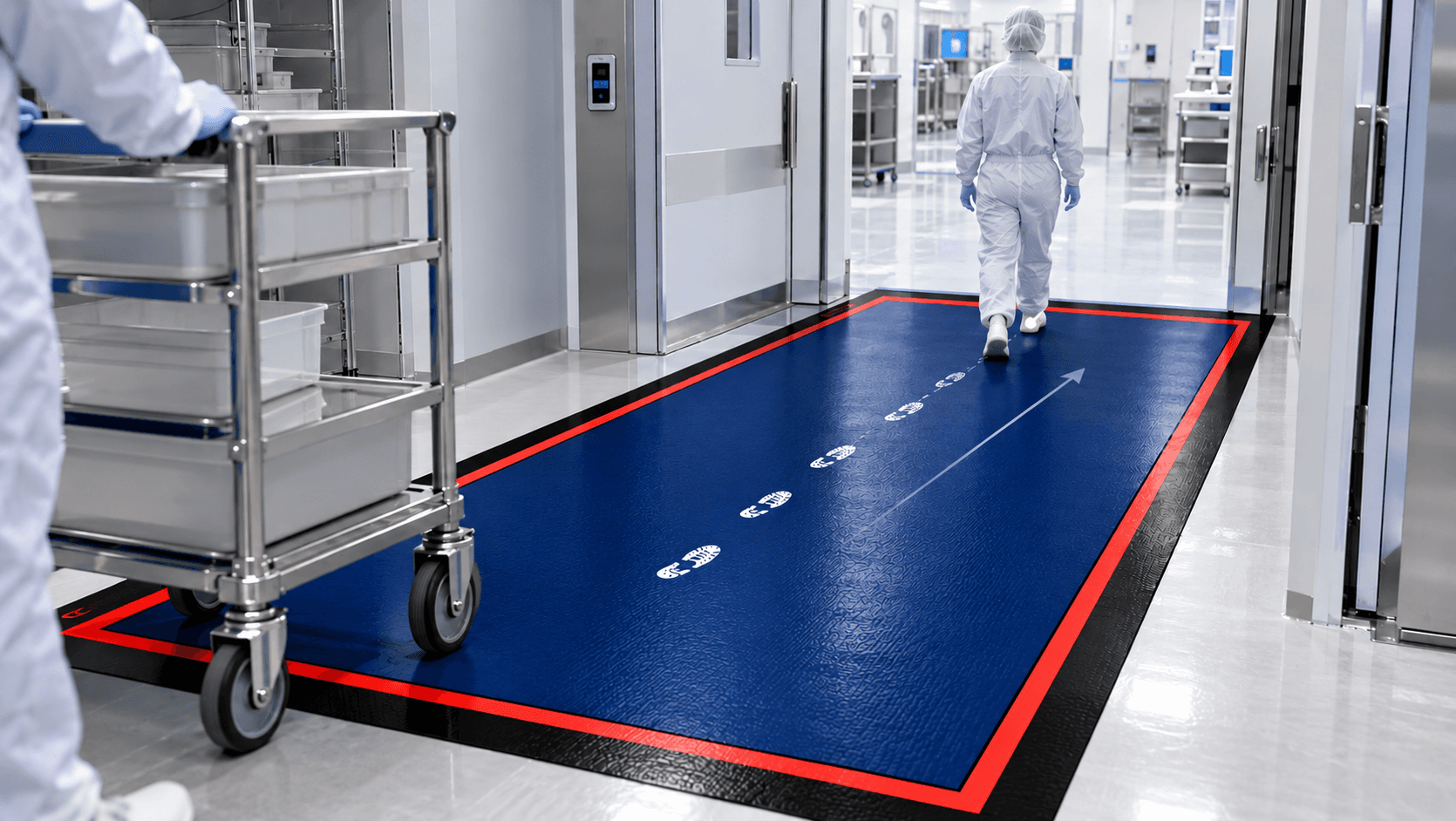
How long should a cleanroom mat be? Size contamination control matting by stride length, wheel circumference and wheelbase, not by the width of the door.

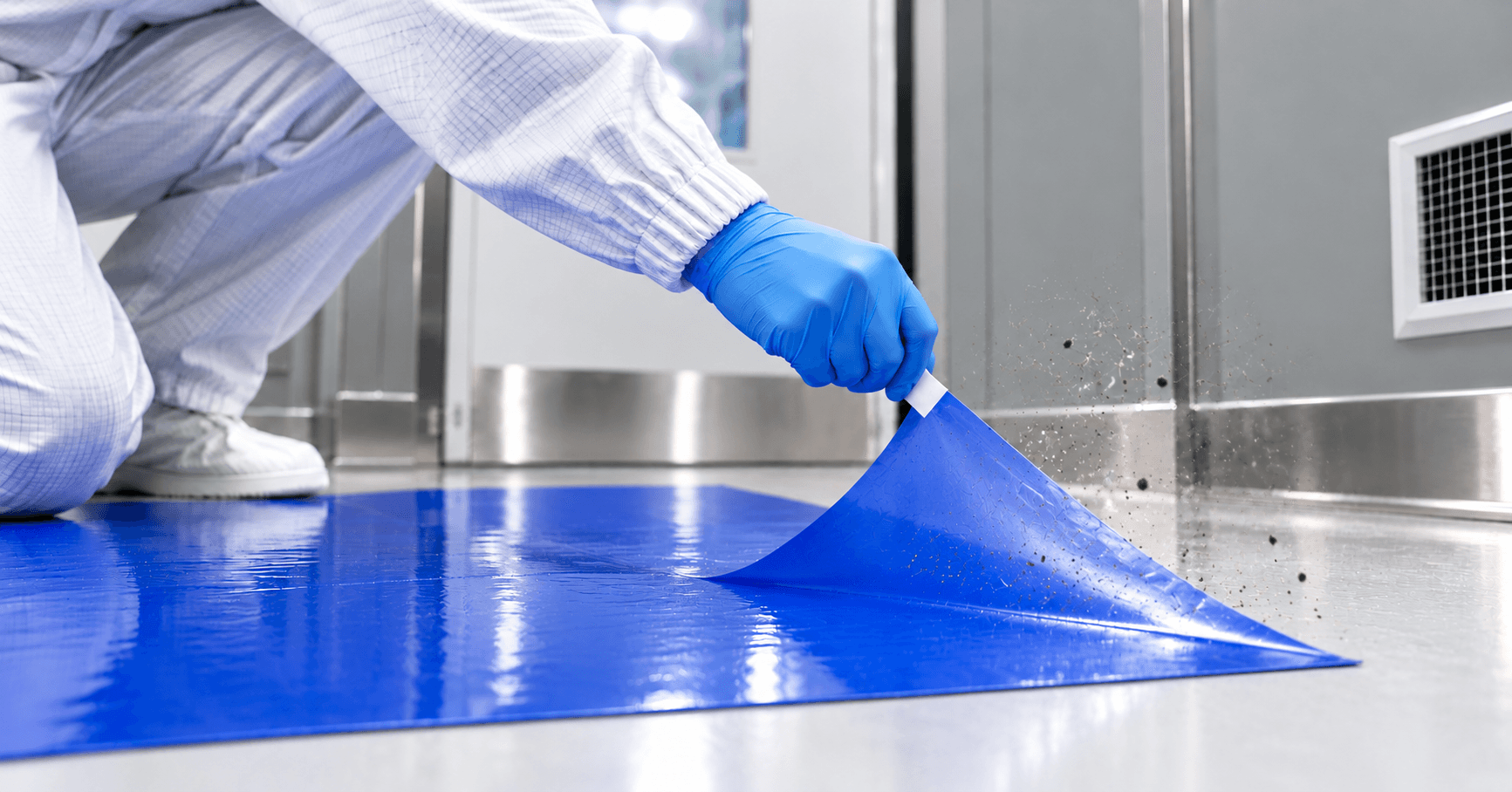
Peeling and rolling used tacky mat sheets can create static and release particles at cleanroom entrances. See the mechanism and a reusable alternative.

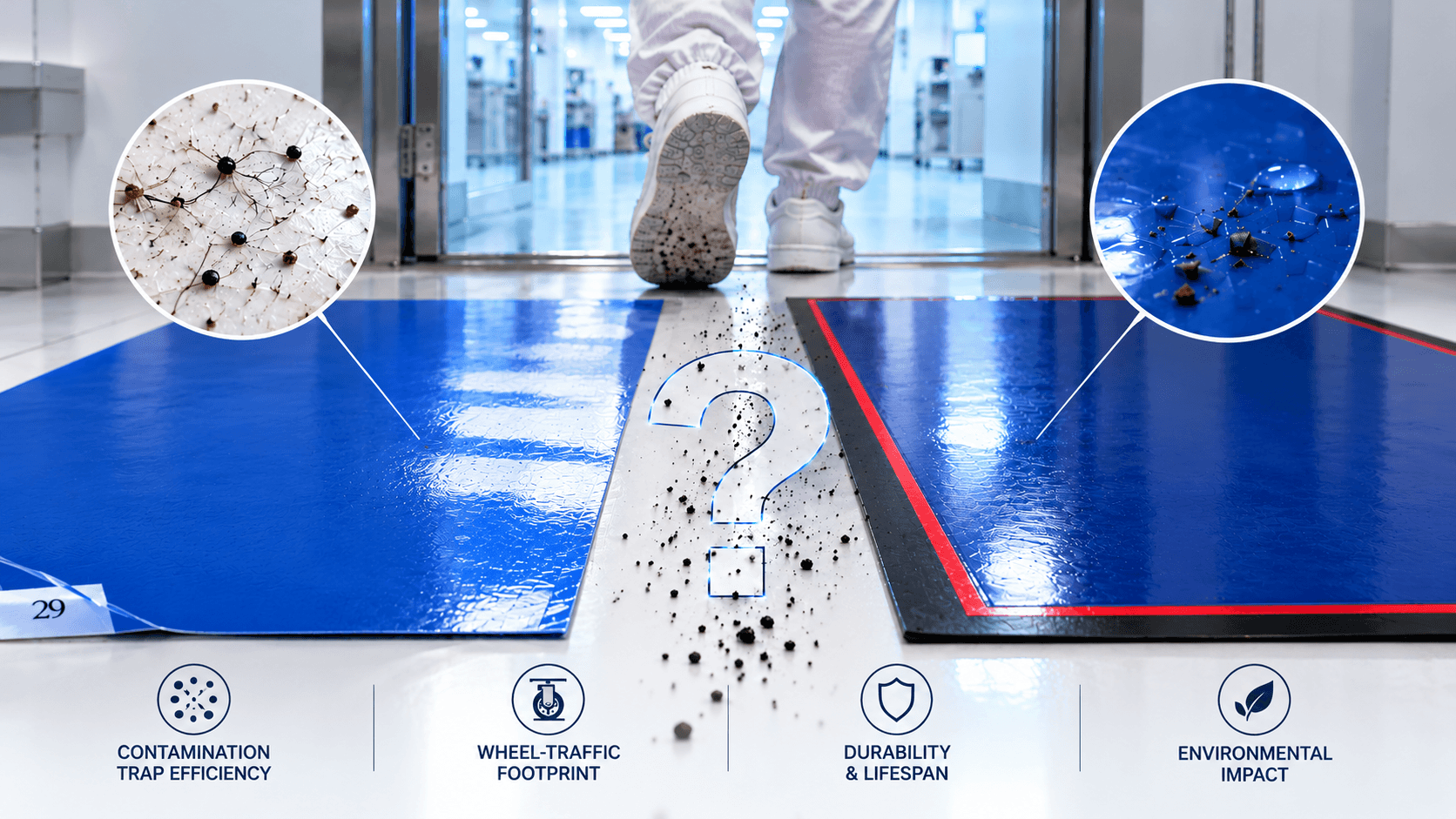
Compare sticky mats and washable polymeric contamination control matting on trap efficiency, wheel-traffic footprint, durability and environmental impact.